
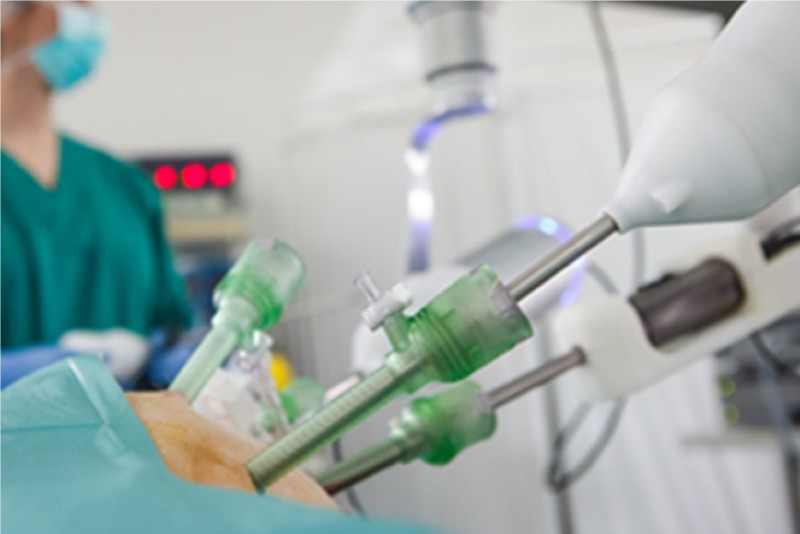
La robótica aplicada a la medicina o la medicina aplicada a la robótica. Una carrera de fondo que se inició a principios de los 2000 y que empieza a acelerarse. Con el paso de los años se han ido implantando robots hasta llegar a tener un robot quirúrgico en la mayoría de hospitales nacionales. El robot quirúrgico está controlado durante todo el procedimiento por el cirujano que opera y toma las decisiones desde una consola facilitando la cirugía mínimamente invasiva, hecho que potencia que la visión, precisión y control las habilidades del cirujano sean en muchos casos superiores a las cirugía abierta o laparoscópica.
La composición de los robots quirúrgicos actuales es:
- Consola: desde la que el cirujano opera sentado y está situada en mismo quirófano. La tecnología empleada es el 3D, que permite al cirujano estar inmerso en la cirugía.
- Torre de visión: Se sitúa al lado del paciente como la torre de endoscopia/laparoscopia (formada por procesador de imagen, fuente de luz, videolaparoscopio…)
- Base o carro quirúrgico: incorpora el núcleo del robot con tres o cuatro brazos robóticos interactivos en el extremo de los cuales se encuentran acopladas las distintas herramientas que el médico necesita para operar (bisturís, tijeras, bipolar, etc.) todo controlado desde la consola.
Una de las principales ventajas que ofrece el robot es reducir el posible temblor del cirujano y perfeccionar todos sus movimientos como lo haría una muñeca humana (movimientos más precisos en espacios más reducidos) y así minimizar las posibilidades de error. Hoy en día, los robots operan en centros hospitalarios públicos y privados de todo el mundo.
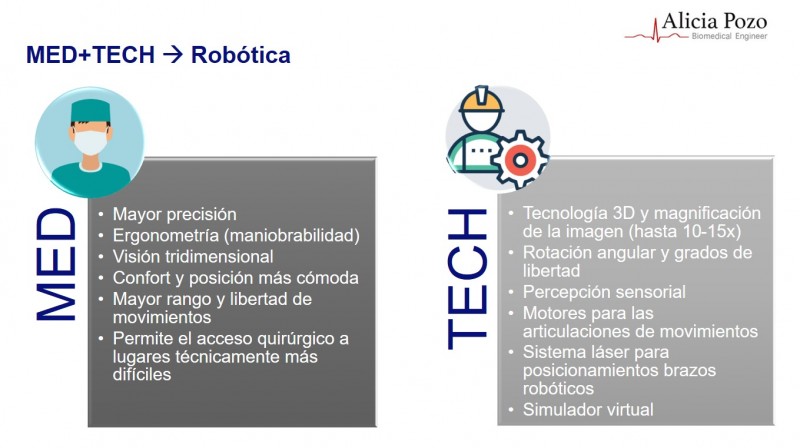
Robotics applied to medicine or medicine applied to robotics. A long distance race that started in the early 2000s and now is growing to accelerate. Over the years, many surgical robots have implanted worldwide. Nowadays, most of the national hospitals in Spain have a robot. The surgical robot is controlled all time by a surgeon who operates and makes decisions from a console that facilitates minimally invasive surgery. The vision, precision and control of the surgeon’s skills are in many cases superior to open or laparoscopic surgery.
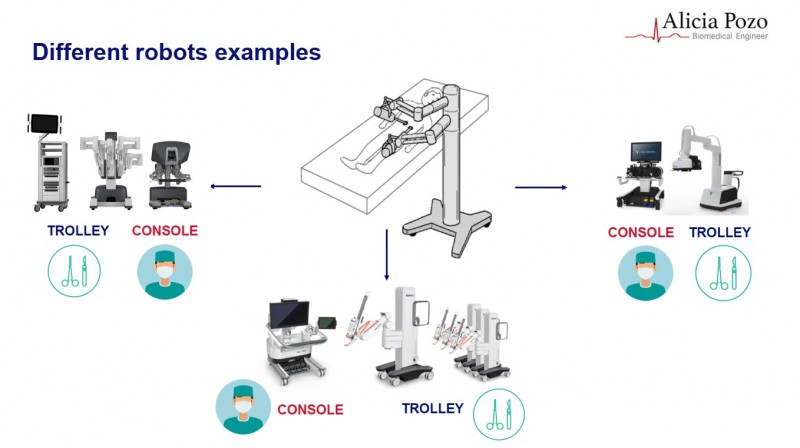
The composition of current surgical robots is:
- Console: the surgeon operates seated in and is located in the same operating room. The technology used is 3D, which allows the surgeon to be immersed in surgery.
- Tower: Located next to the patient as the endoscopy tower (consisting of an image processor, light source, videoscope …)
- Base or surgical trolley: it incorporates the core of the robot with three or four interactive robotic arms at the end of which are attached the different tools that the doctor needs to operate (staplers, scissors, bipolar, etc.) all controlled from the console.

One of the main advantages offered by the robot is to reduce the surgeon’s possible tremor and perfect all his movements as a human wrist would do (more precise movements in smaller spaces) reducing the chances of error. Robots operate in public and private hospitals around the world.
